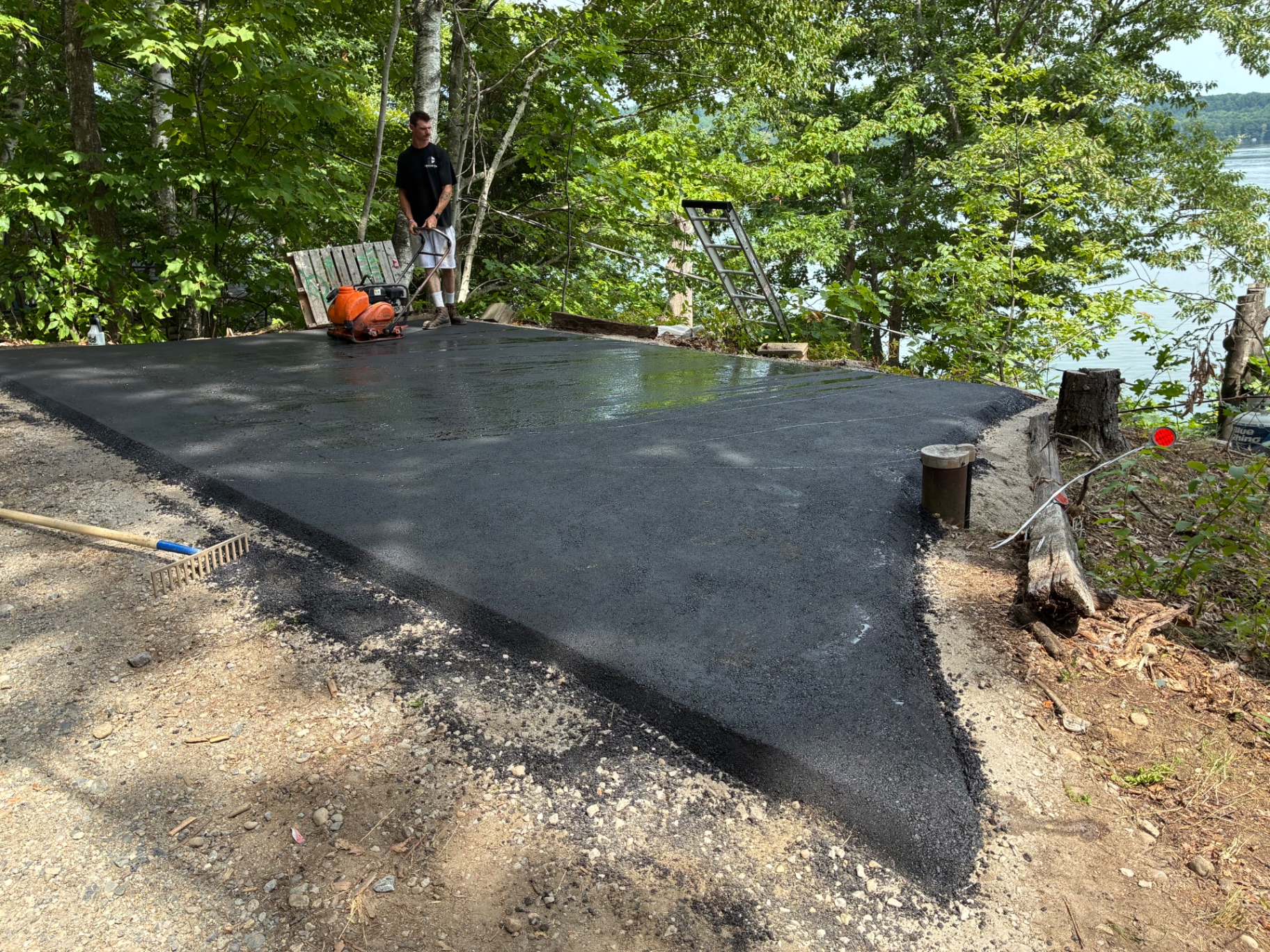
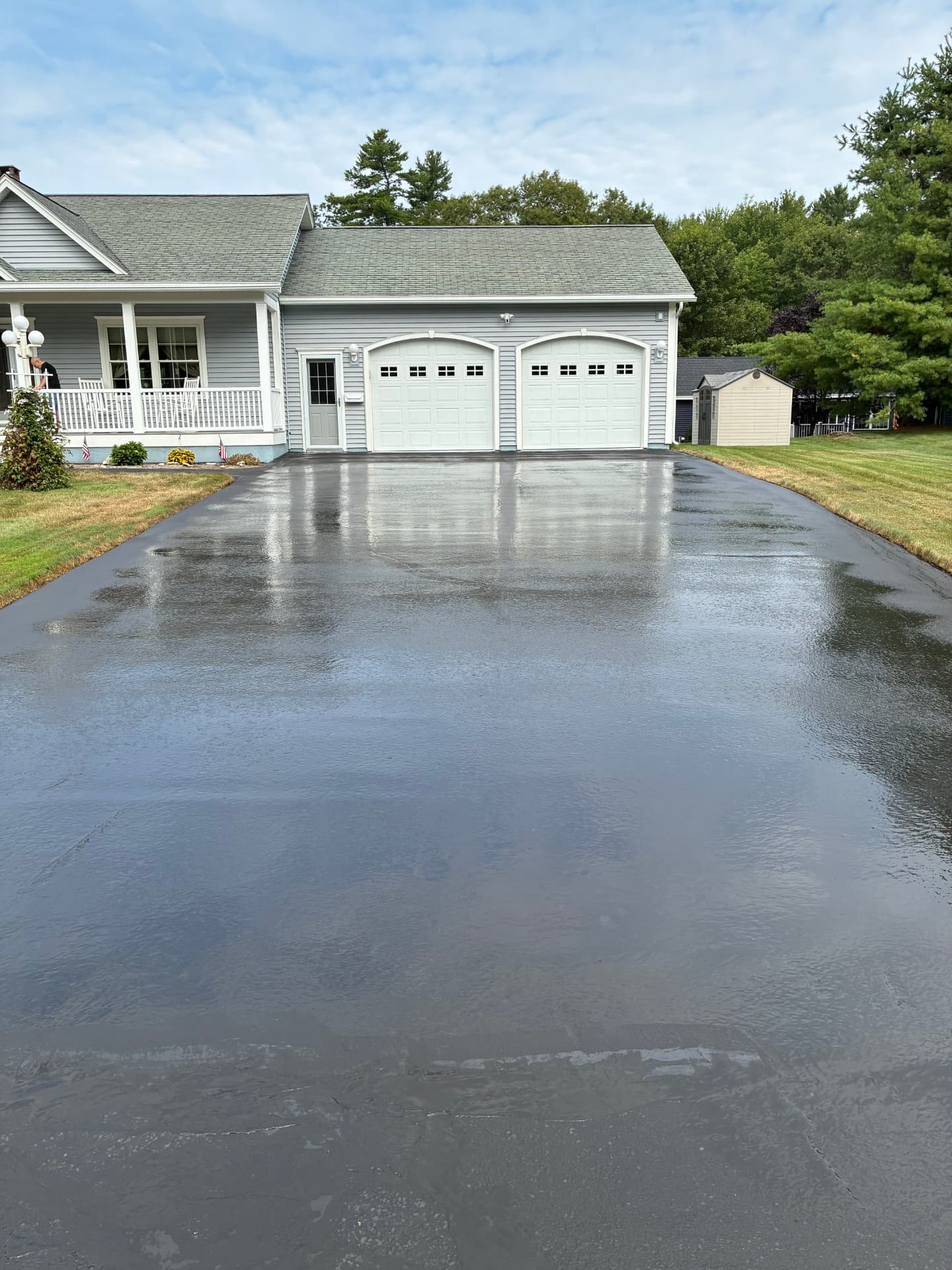
York sits on the southern Maine coast, where the temperature crosses the freezing point over and over from November into April instead of simply staying cold. That cycling is what breaks driveways here. Water finds a hairline crack, freezes, expands, and pries the crack wider. The next thaw lets more water in, and the cycle repeats until it reaches the gravel base. Once water is under the base, the surface starts to move, and moving asphalt cracks in the spiderweb pattern that means a rebuild rather than a patch.
Salt air adds to it. So does road salt tracked up a driveway all winter, and the sun that bakes the surface all summer. None of that is avoidable on the coast. What is avoidable is letting small problems stay unaddressed until they turn into big ones. A crack filled in the fall keeps water out through the winter. A driveway graded to shed water instead of hold it lasts years longer than one that puddles. Drainage first, surface second: that is the order that keeps pavement alive in this climate.
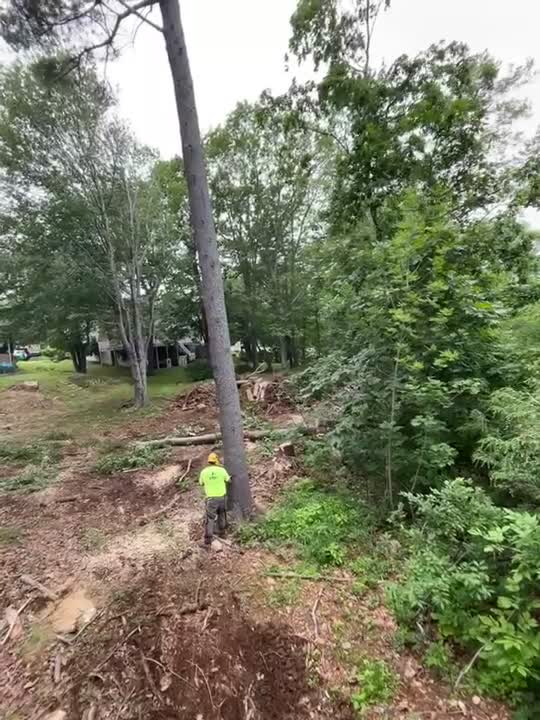
Trees work on the same schedule. Coastal wind and nor'easters load limbs from directions inland trees never see, and the trees that cause trouble are usually the ones that grew close to a house, driveway, or power drop over decades. Dead limbs, split trunks, and lean that showed up after a storm are the signs worth acting on before the next one. When a limb comes down over a driveway in February, it is a snow problem, a tree problem, and an access problem at the same time.