
Driveway Sealcoating and Crack Filling in Southern Maine and the New Hampshire Seacoast
ACTS Services LLC seals and repairs asphalt in York, Maine. We apply sealcoating and hot rubber crack filling to driveways and commercial lots to protect them from the seacoast's freeze-thaw cycles, road salt, and UV. It is the low-cost way to add years to your pavement. Call (207) 712-4447 for a free quote.
What sealcoating does, and what it does not
A surface layer, not a repair
Sealer sits on top of the asphalt and blocks out sun, water, salt, and fuel drips. It slows oxidation, which is what turns black asphalt gray and brittle over time. What it does not do is add strength back into pavement that has already broken down underneath.
When sealcoating is the wrong call
Failed base, alligator cracking, and potholes are structural problems. Sealer over that kind of damage looks fine for a few weeks and then cracks right along with the pavement underneath. That work belongs to asphalt paving or patch repair, and we will say so instead of selling you a coat of sealer that will not hold.
Rubber crack filling
Cracks get cleaned out and filled with hot rubber crack sealant before any sealer goes down. Hot rubber stays flexible through the winter, so it moves with the pavement instead of popping loose the first time the ground shifts. Filling cracks before winter matters most, because a small crack that takes on water in November can be a wide seam by spring.
Prep work
Sealer only bonds to a clean surface. We blow off debris, scrub oil spots and drip stains, and edge the driveway before a drop of sealer goes down. Cracks are filled first and given time to set. Skipping prep is the fastest way to get a coat that peels within a season.
Timing and cure
Sealer needs warm, dry weather to cure right, so we schedule it for stretches with no rain in the forecast and daytime temperatures well above freezing. Keep cars off the driveway for at least 24 hours after we finish, longer if it stays cool or humid. Rushing it leaves tire marks in the fresh coat.
How often to reseal
Most driveways here get resealed every two to three years. Sun exposure, daily traffic, and how the previous coat was applied all shift that timeline. A shaded driveway with light use can go longer between coats than one baking in full sun all day.
Why coastal Maine wears pavement hard
York sits on the coast, which means sun, salt air, and freeze-thaw cycles all work on asphalt at once. Sun and oxygen dry out the binder in asphalt over time, which is what makes old pavement look gray and feel brittle underfoot. Salt from winter treatment and from the ocean air speeds that up. Sealer is a barrier against all three, which is why a coat every couple of years does more for a driveway's life here than in a drier, inland climate.
Freeze-thaw is the bigger threat to the pavement itself. Water finds any small crack, freezes, expands, and widens it, then thaws and lets more water in on the next cycle. That is why crack filling before winter is not cosmetic. It keeps water from ever getting the chance to start that cycle in the first place.
Sealcoating, second view
Working the sealer out evenly so the finished surface cures to one consistent black.
Finished sealcoating jobs
These are driveways we sealed in southern Maine and the New Hampshire seacoast, photographed the same day the sealer went down.
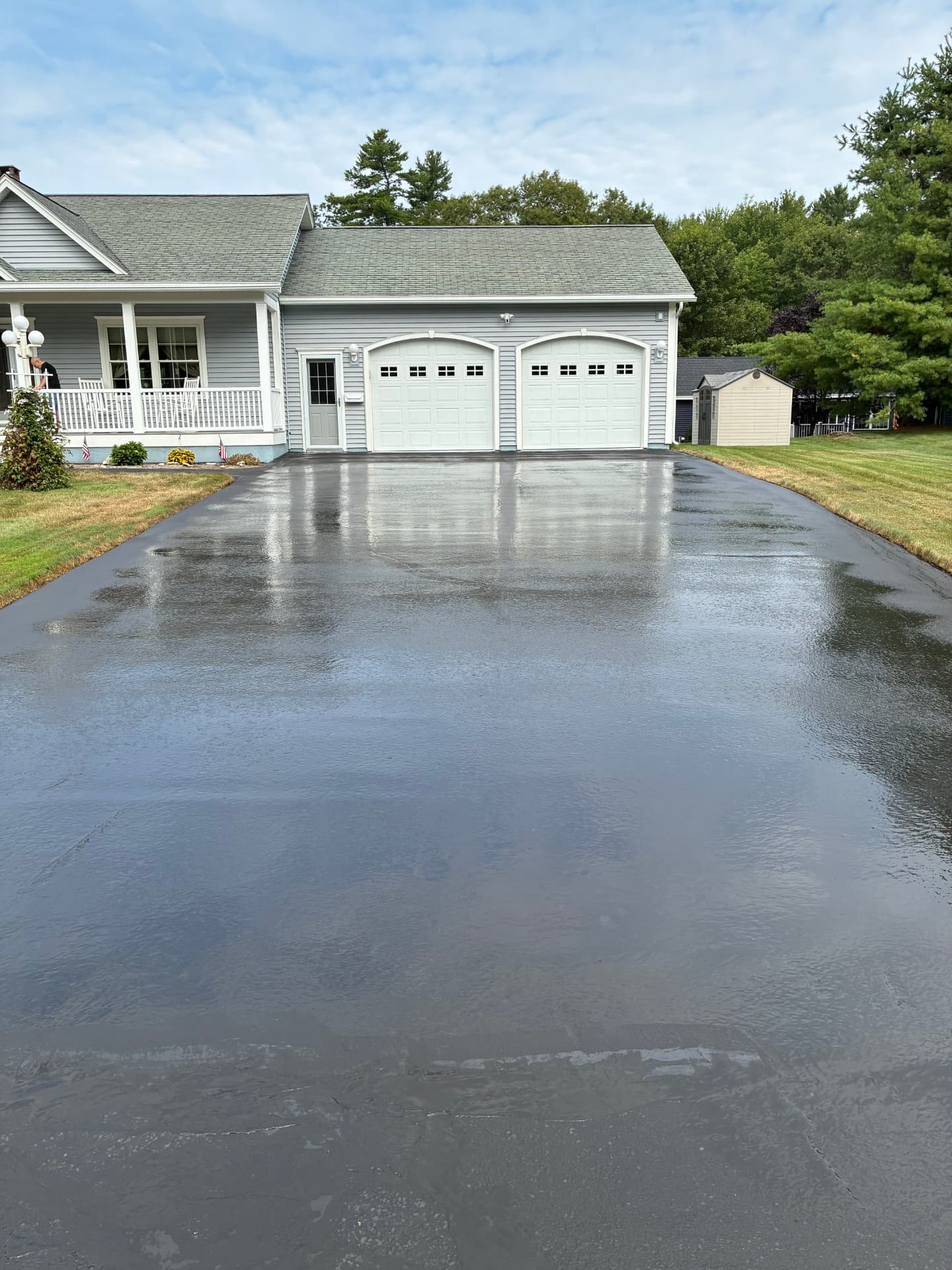
Sealed two-car driveway
A wide residential driveway right after sealer went down, cured to one even black from the garage aprons out to the road.
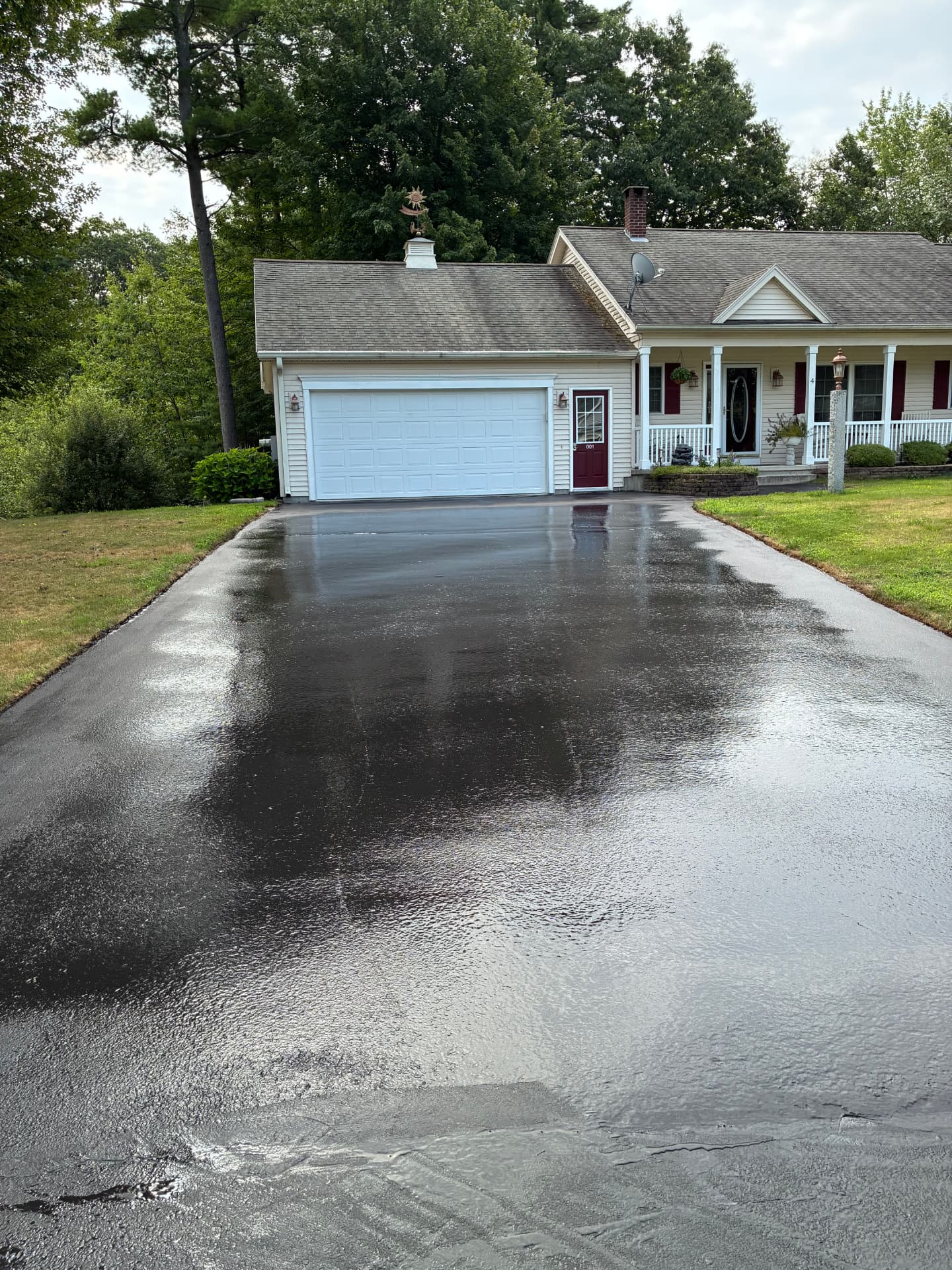
Sealed driveway and apron
Fresh sealer on a ranch driveway, with the apron and edges cut in by hand so the coverage runs right to the grass line.
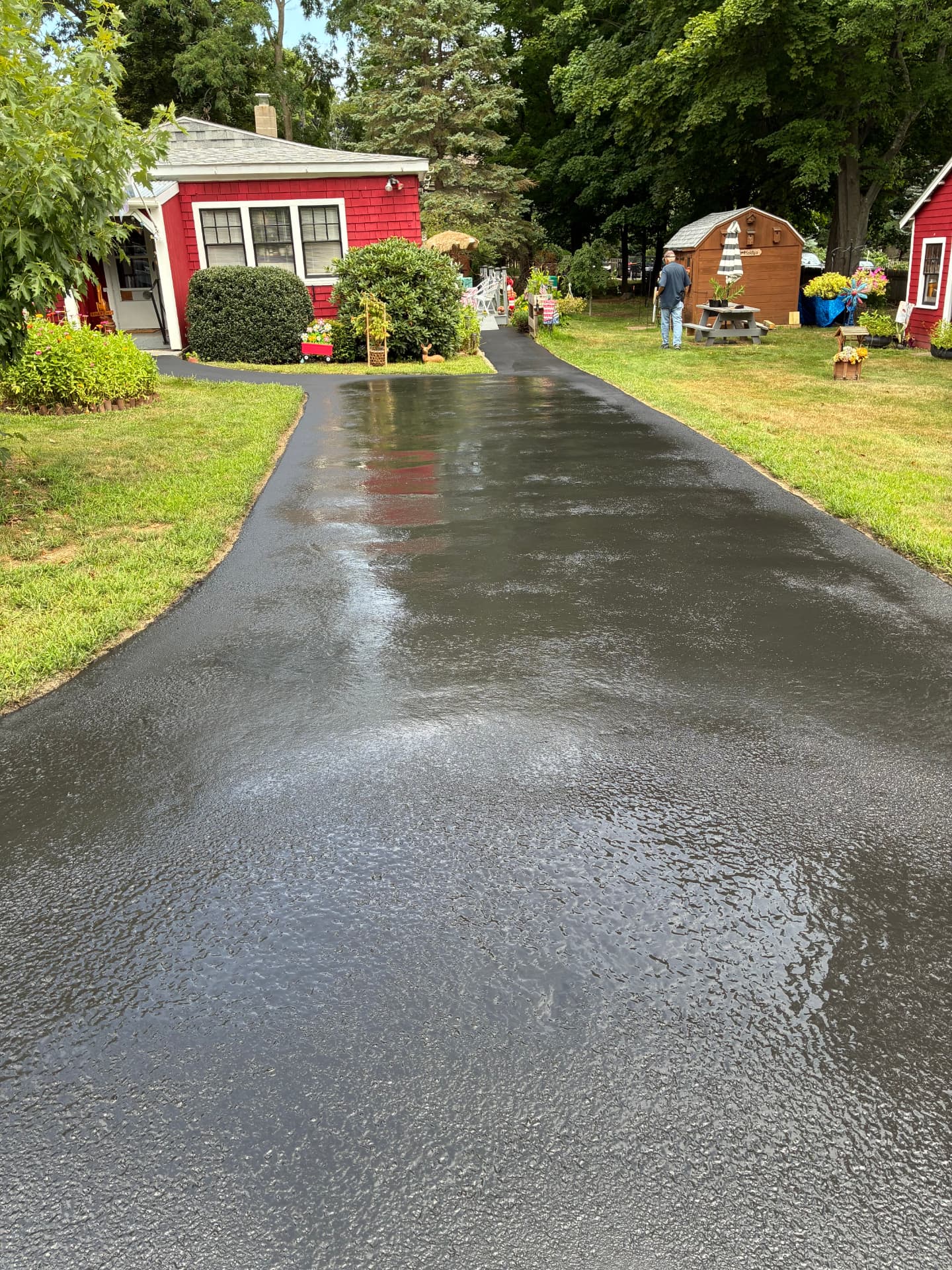
Sealed long driveway
A long driveway sealed end to end in one pass sequence, including the branch that runs up to the side entry.
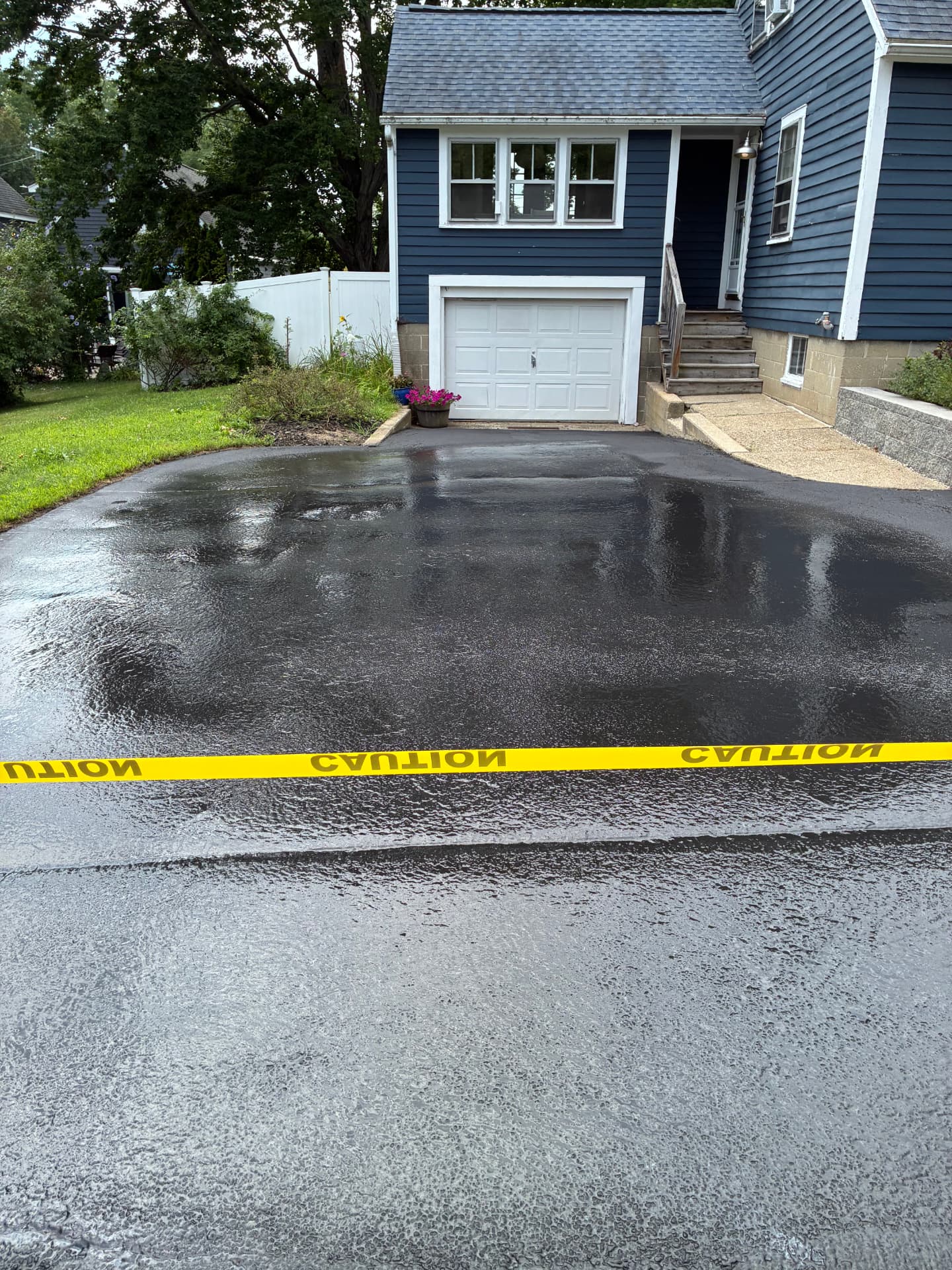
Sealed and taped off to cure
Caution tape across a finished driveway while the sealer cures, which is how we leave a job so nobody tracks through it.
Commercial lots
We seal commercial lots and private roads the same way we treat a residential driveway: clean the surface, fill cracks with hot rubber, and apply sealer in warm, dry weather. Lots that take daily traffic from multiple vehicles benefit from staying on a regular sealing schedule rather than waiting until the surface looks worn.
We work with property managers and business owners to schedule around operating hours where we can, since a lot needs to stay closed off while the sealer cures.
What sealcoating costs in Maine, in general terms
We do not publish a sealcoating price. As general Maine market context, residential driveway sealcoating commonly runs from a few hundred dollars up to roughly fifteen hundred, depending on square footage, how much oil spotting and priming the surface needs, and whether hot rubber crack filling is included in the same visit. Commercial lots are quoted separately because striping, traffic control, and staging change the work.
Those figures are general market context for Maine, not a quote from ACTS Services. Sealing a sound driveway is maintenance and costs a fraction of replacement. If the base has failed or the surface shows alligator cracking, the honest answer is asphalt paving or patch repair instead, and we will tell you that at the on-site look. We seal driveways and lots throughout York, Maine and across York and Cumberland counties in Maine and Strafford and Rockingham counties in New Hampshire.
Answers
Sealcoating questions
How much does sealcoating cost in Maine?
We do not publish a price. As general Maine market context, residential driveway sealcoating commonly runs from a few hundred dollars up to roughly fifteen hundred depending on size, surface prep, and whether crack filling is included. We give you a free on-site quote for your own driveway.
What does sealcoating actually do?
Sealcoating protects the top surface of asphalt from sun, salt, and fuel drips. It slows down oxidation and helps shed water. It is a maintenance layer, not a structural fix, so it will not repair a cracked or sunken base.
How often should a driveway be resealed?
Most York driveways get resealed every two to three years, depending on sun exposure and traffic. A driveway that sits in full sun or takes daily car traffic wears faster than one shaded by trees and used occasionally.
Can sealcoating fix cracks or potholes?
No. Sealcoating covers the surface, it does not bridge a moving crack or fill a hole on its own. Cracks get rubber filled first, and real damage like potholes or alligator cracking needs patching or paving, not sealer.
How long before I can drive on sealed pavement?
Plan on keeping vehicles off for at least 24 hours, longer in cool or damp weather. Foot traffic can usually resume sooner, but tires will pick up soft sealer if you rush it.
What is the best time of year to sealcoat in Maine?
Warm, dry stretches from late spring through early fall work best. Sealer needs warm pavement and dry air to cure properly, so we watch the forecast and will not schedule the day before rain.
Do you fill cracks before sealing?
Yes, and it needs to happen in that order. We clean out cracks, fill them with hot rubber crack sealant, let it set, then apply sealer over the top so water cannot get behind the patch.
Do you seal commercial lots?
Yes. We seal commercial lots and private roads the same way we treat driveways: clean the surface, fill cracks, and apply sealer in dry, warm conditions.
My driveway has alligator cracking. Should I seal it?
No. Alligator cracking means the base has failed underneath, and sealer will not hold that together. That kind of damage needs patch work or a rebuild, which is asphalt paving, not sealcoating.
Talk to the owner
Get a sealcoating quote
Tell us the address and how the driveway looks. We will tell you honestly whether it is ready for sealer or whether it needs crack work or paving first.